
Welcome to Blogs & Insights, where scientific literature meets clarity.
Explore peer-reviewed research, laboratory investigations, and emerging data on peptide compounds and related molecular studies.
Content is intended strictly for informational and research purposes.
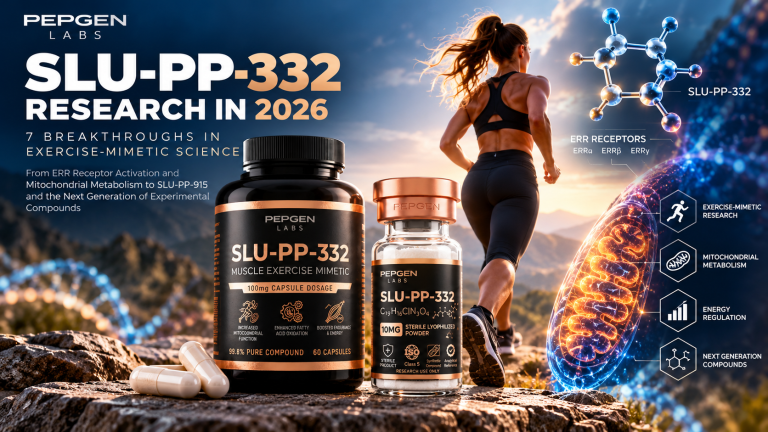
SLU-PP-332 Research: 7 Powerful Findings in Exercise-Mimetic Science for 2026
Research Overview: From ERR Receptor Activation and Mitochondrial Metabolism to SLU-PP-915: The Latest Scientific Evidence Explained Research Overview: SLU-PP-332 research is advancing our understanding of exercise-mimetic compounds, mitochondrial metabolism, and estrogen-related receptor signaling. From foundational experiments demonstrating increased endurance in mice to 2026 investigations of improved molecular structures and orally active alternatives,...
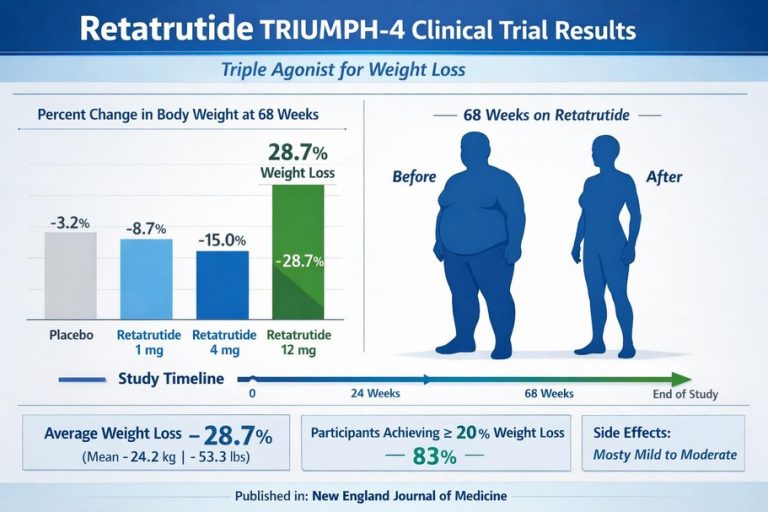
Retatrutide Phase 3: 7 Important Findings From 2026 Research
Research Overview: What Retatrutide Phase 3 research reveals about triple-receptor signaling, body composition, metabolic biology and the next generation of multi-pathway peptide science Retatrutide Phase 3 research has become one of the most important developments in metabolic and peptide science in 2026. New peer-reviewed results from the TRIUMPH clinical program have moved...

Peptide Market 2026: Why Peptide Science Is Entering a New Era
Research Overview: The peptide market 2026 is entering a new stage. What was once a relatively specialized area of biotechnology is increasingly connected to mainstream pharmaceutical development, metabolic research, longevity science, neurobiology and next-generation drug delivery. GLP-1 medicines helped bring peptide therapeutics into global public awareness, but the scientific movement now extends...

FDA Peptide Regulations 2026: New Approvals, New Rules & What Comes Next
Research Overview: FDA peptide regulations 2026 have become one of the most important stories in modern peptide science—but the story is much bigger than restrictions. During 2026, the U.S. Food and Drug Administration increased regulatory attention across several parts of the peptide landscape. At the same time, FDA approved a higher-dose semaglutide...

DSIP and Epithalon: Sleep, Melatonin & Circadian Rhythm Research
Research Overview: DSIP and Epithalon represent two very different areas of peptide research connected to sleep, circadian rhythms and neuroendocrine biology. Although both compounds are frequently discussed in the context of sleep research, they should not be treated as two versions of the same “sleep peptide.” Delta Sleep-Inducing Peptide (DSIP) has been...

Semax vs Selank: Nootropic Peptides, BDNF & Cognitive Research
Research Overview: Semax vs Selank is one of the most interesting comparisons in nootropic peptide research. Both peptides have been investigated in neuroscience, cognition and neuroregulation, but their structures, research histories and proposed biological pathways are distinctly different. Semax research has focused strongly on BDNF, NGF, neuroplasticity, neuronal signaling and neuroprotection, while...

Peptide Side Effects: What Research Actually Shows
Research Overview: earch for peptide side effects online and it is easy to find long lists of warnings presented as though every peptide produces essentially the same effects. Scientifically, that makes little sense. Peptides are an enormous family of biological molecules. Some occur naturally in the human body, some have become established...

2026 Peptide Pipeline: What’s Coming Next in Peptide & Metabolic Research?
Research Overview: The 2026 peptide pipeline is moving far beyond the first generation of single-pathway compounds. GLP-1 biology dramatically changed metabolic research, but the next wave is asking a much bigger question: What happens when researchers target multiple biological pathways, develop longer-acting molecules, explore oral peptide delivery and investigate outcomes beyond body...

Epithalon Peptide & Telomerase: Telomeres, Cellular Aging and Longevity Research
Research Overview: Epithalon peptide research sits at the intersection of some of the most fascinating questions in longevity science: Why do cells age? What happens as telomeres shorten? Can telomerase activity be experimentally altered? And what role might short peptides play in cellular aging research? Epithalon—also spelled Epitalon—is the synthetic tetrapeptide Ala-Glu-Asp-Gly...